逆光条件下でのリネン シフォン生地の光透過率はどのようになりますか?
逆光下でのリネンシフォンの光学的挙動を理解する
リネンシフォン is known for its lightweight structure and delicate semi-transparent appearance, characteristics that make its optical behavior under backlighting particularly notable. When illuminated from behind, the fabric reveals its internal weave, yarn uniformity, and fiber characteristics more distinctly than under direct or diffuse lighting. This is because backlighting emphasizes the openness of the weave, allowing light to pass through the inter-yarn spaces while interacting with the density and thickness of the linen fibers.その結果、糸の直径、撚り、表面の質感の微妙な変化が明らかになる視覚的な現象が生じます。天然繊維であるリネンには固有の不規則性があり、それがこの効果にさらに影響を与えます。より均一な光透過率を持つ傾向がある合成シフォンと比較して、 リネンシフォン 透過光と散乱光の間のより複雑な相互作用を示します。
バックライトの透明度に対する材料組成の影響
リネンシフォンの光透過率は、材料組成中のリネンの割合に大きく依存します。 Linen fibers exhibit a matte surface and irregular cross-section, causing light to scatter in multiple directions as it passes through the yarn bundles. When blended with polyester, rayon, or nylon—as commonly practiced by textile manufacturers including Yongjun Textile—the transparency under backlighting becomes more predictable because synthetic fibers provide uniformity. A higher content of polyester or rayon generally increases clarity under backlighting, while a higher linen content results in more diffused transmission. This distinction is essential in design applications where the visual effect under backlighting influences garment silhouette, layering, or aesthetic expression.
バックライトの外観の制御における糸の撚りレベルの役割
Yarn twist is one of the most influential factors in determining how linen chiffon behaves under backlighting. A higher twist creates tighter yarn bundles, reducing the effective gap between fibers and increasing structural stability, which can lead to more controlled light transmission. Lower twist, on the other hand, results in a looser yarn structure with larger internal air pockets, making the fabric appear softer and more diffused when placed behind a light source. Linen yarns naturally require moderate twist levels to maintain cohesion, but any deviation caused by spinning or processing variations can directly affect how the fabric visually responds to backlight.これらの繊細さは、すでに自然に開いた織りを備えているシフォン構造でより顕著になります。
バックライトの透明性の主な決定要因としてのオープンネスを織り込む
織りの開放感は、見る人と光源の間に置かれたときにリネンシフォンがどのように光を透過するかを決定する要素です。よりオープンな織り方により、光が通過するより大きなチャネルが作成され、その結果、バックライトの透明性が顕著になります。対照的に、わずかにきつめの織り構造はより多くの光を散乱させ、より柔らかく滑らかな照明効果を生み出します。 Manufacturing facilities such as those near China Light Textile City, where Yongjun Textile operates, rely on advanced looms that offer precise control over warp tension and weft insertion speed.この精度は安定した織り構造を保証するのに役立ち、それによって逆光条件下で生地がどの程度一貫して機能するかに影響を与えます。縦糸の密度や横糸の間隔の違いは、たとえ最小限のレベルであっても、バックライトの下で視覚的に増幅されることがあります。
逆光条件下での厚さの変化とその光学的影響
リネンシフォンは、リネン繊維の自然な特性により、厚さに若干のばらつきが生じることがよくあります。これらの変動により、生地がバックライトで照らされた場合、不透明度に局所的な違いが生じます。厚い部分はより多くの光を散乱し、透明度が低くなりますが、薄い部分はより多くの光を透過し、より明るい外観を作り出します。 This natural inconsistency can contribute to the visual charm of linen chiffon, giving it a textured, organic quality when used in garments or décor exposed to backlighting.メーカーは紡糸技術と繊維の選択を改善することで厚み分布の安定化を目指しています。 However, the inherent irregularity of linen fibers ensures that a completely uniform backlight behavior is uncommon, especially in fabrics with a high linen ratio.
バックライト散乱特性に対するファイバー表面テクスチャの影響
リネン繊維のやや粗い質感は、糸の構造を通過する際の光の散乱に影響を与えます。 Unlike smoother synthetic fibers that transmit light with greater clarity, linen fibers scatter more light due to microscopic surface irregularities.これにより、逆光の下で見ると、シャープに照らされたシルエットではなく、拡散した輝きが得られます。したがって、この生地は、逆光環境下でもより柔らかく繊細な外観を維持します。 This property is appreciated in garments designed for layered effects, where backlighting contributes to the visual dimension without revealing excessive detail.ブレンドリネンシフォンにおける滑らかな合成繊維と質感のある天然繊維とのバランスが、この光学散乱挙動に影響を与えます。
染色と色の濃さがバックライトのパフォーマンスに与える影響
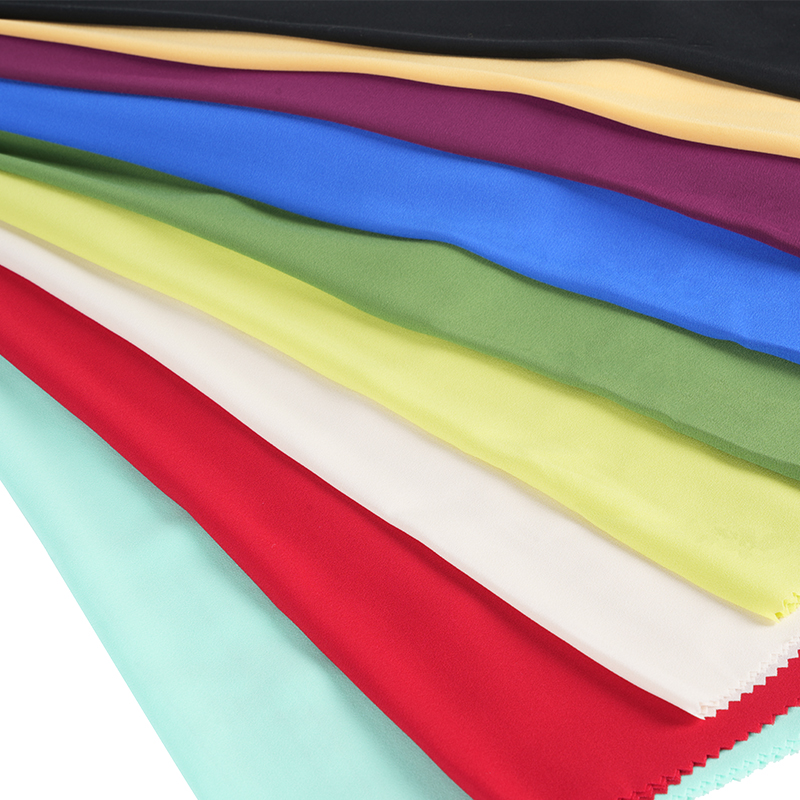
リネンシフォンは染色工程や色の濃さにより、逆光下での光の透過率が大きく変わります。ベージュ、アイボリー、淡いグレーなどの明るい色合いでは、バックライトがより多く透過し、織り構造と糸の間隔が強調されます。暗い色合いは、強い逆光の下でもより多くの光を吸収するため、生地の視認性を低下させます。染色の一貫性も、布地内での光の挙動に影響します。天然繊維で時々観察される不均一な染料の浸透により、バックライトの輝度にわずかな違いが生じることがあります。 Companies like Yongjun Textile, which specialize in dyeing techniques such as yarn-dyeing, glazing, printing, and coating, emphasize color stability to ensure predictable backlight visual outcomes.高品質の染色により斑点が軽減され、生地が後ろから照らされたときに均一な光学プロファイルが保証されます。
仕上げ技術とバックライトの透明度への影響
後処理技術により、リネン シフォンのバックライト動作が大幅に変更されます。 Softening treatments can reduce fiber stiffness, making the fabric drape more fluidly, which affects how light diffuses through overlapping folds.カレンダー加工、グレージング、またはライトコーティングは表面の平滑性を変える可能性があり、それによって反射光特性と透過光特性に影響を与える可能性があります。 Burnt-out finishing—one of the specialized processes adopted by companies like Yongjun Textile—creates semi-transparent motifs by removing certain fibers in blended fabrics, enhancing localized backlight transmission.複合仕上げにより繊維の配列も安定化し、照明下での生地の挙動がより安定します。これらの仕上げオプションにより、デザイナーはリネン シフォンの光学特性を特定の用途に合わせて調整できます。
バックライト露光時の環境条件と照明強度
環境条件は、逆光の下でリネンシフォンがどのように見えるかに大きく影響します。強い太陽光は、屋内の人工照明よりも鮮明な照明コントラストを生み出します。湿度が高いと繊維が膨張して透明度がわずかに低下する可能性がありますが、湿度が低いと繊維がリラックスして開放性が高まります。 Linen fibers respond more noticeably to temperature and moisture variations compared with synthetic fibers, making natural fluctuations in backlight transparency more pronounced. This dynamic optical behavior contributes to the fabric’s suitability for environmental-responsive design elements in clothing or interior decoration.
バックライト下でのファブリック層とオーバーラップの相互作用
リネンシフォンを複数の層で重ねると、バックライト効果がより複雑になります。各層は光のさらなる散乱と吸収に寄与し、全体の透過率を低下させます。デザイナーは、シルエットの露出を制御したり、段階的なシェーディング効果を作成したりするために、レイヤリングを使用することがよくあります。半透明の程度は、各層の密度と厚さ、および生地に適用される仕上げ処理によって異なります。 Blended linen chiffon, in particular, demonstrates smoother transitions in overlapping layers due to the balance between natural and synthetic fibers.舞台照明や強い逆光の下で見ることを目的とした衣服をデザインする場合、レイヤーがどのように相互作用するかを理解することが不可欠です。
バックライトの視認性を最適化するための産業上の考慮事項
For manufacturers, optimizing light transmittance under backlighting involves careful control of yarn quality, weaving precision, and finishing consistency.安定した光学的外観を維持するには、糸の不規則性を監視する必要があります。高度な織機は、逆光の下で明らかになる張力や間隔の変動を軽減します。コーティング、グレージング、またはエンボス加工を処理するために装備された仕上げラインは、表面の均一性の局所的な変化を避けるために一貫して稼働する必要があります。 Companies like Yongjun Textile, which integrate multiple production techniques within the same facility, can manage these processes more effectively, ensuring that the final linen chiffon fabric meets predictable performance expectations for customers requiring consistent backlit appearance.
バックライトの透明性が特に重要な用途
バックライトの透過性は、さまざまな繊維用途において重要です。アパレル デザインでは、ブラウス、スカーフ、ドレスなどのシフォン衣類は、屋外環境で自然逆光に遭遇することがよくあります。生地が光を透過または拡散する方法は、知覚されるエレガンス、重ね着の深さ、シルエットに影響を与える可能性があります。 In interior applications, linen chiffon may be used in lightweight curtains or decorative panels, where backlighting from windows affects aesthetic outcomes.ステージ衣装や写真用テキスタイルも、強い指向性照明の下での予測可能な光学的動作に依存しています。 Understanding how linen chiffon reacts to backlight allows designers to select materials that align with visual goals in these diverse environments.
Will variations in the thickness of linen chiffon fabric cause differences in local transparency due to variations in the density of the texture?
リネンシフォン生地の基本的な特徴を理解する
Linen chiffon is a lightweight textile that blends the natural properties of linen fibers with the soft and airy characteristics of chiffon structures. While classic chiffon is often made from polyester, nylon, silk, or rayon, linen chiffon incorporates linen yarns or linen blends to introduce a distinctive matte appearance, a slightly crisp hand feel, and improved breathability. The fabric is woven in a manner that maintains a semi-transparent appearance typical of chiffon, but the use of linen can create irregularities in yarn thickness due to the natural variability of flax fibers.この固有の凹凸は、生地の視覚的な質感、密度分布、手触りに影響を与えます。 As companies like Yongjun Textile continue to diversify material choices by working extensively with polyester, polyester-cotton, rayon, nylon, and acetate while also offering various finishing techniques, understanding how thickness variations affect transparency is relevant for fabric development, quality control, and application-specific performance.
リネンの自然な糸の太さの変化とシフォンの構造への影響
リネン繊維は、その自然な不規則性で知られています。 Unlike synthetic fibers that can be manufactured with consistent thickness, linen fibers vary in diameter due to differences in plant maturity, fiber processing, and spinning technique. When linen yarn is woven into a chiffon structure, these irregularities become more noticeable because chiffon typically relies on fine yarns with a high twist or a delicate configuration.リネン糸の太い部分は織りの中により密な領域を作りますが、薄い部分は比較的開いた空間を作ります。糸の密度が低い領域では光がより容易に通過するため、この密度の変動は透明度に直接影響します。したがって、リネンシフォンの全体的な外観は、使用される糸の均一性に応じて微妙な視覚的な違いを示す場合があります。
生地の厚さがリネンシフォンの局所的な透明性にどのように影響するか
生地の厚さは、透明度を決定する中心的な役割を果たします。 When linen chiffon is produced in a thinner variation, the fabric’s open structure allows more light to pass through, resulting in higher transparency.逆に、少し厚いバージョンでは透過光の量が減り、不透明度が高くなる傾向があります。 Since linen fibers are not as fine or uniform as synthetic chiffon yarns, even minor changes in yarn thickness can result in noticeable shifts in transparency.これらの変化は、厳しい視覚的なコントラストではなく、穏やかな陰影の違いとして現れる場合があります。この影響の程度は、織りの固さ、糸の撚り、仕上げプロセス、および生地に使用される特定の混紡によって異なります。 Manufacturers with precise weaving control, such as those operating in established textile hubs like China Light Textile City, often strive to reduce such inconsistencies by improving yarn selection and production monitoring.
光透過への影響におけるテクスチャ密度の役割
組織密度は、縦糸と横糸の両方向の単位面積あたりの糸の数を指します。リネンシフォンは、わずかな濃度の違いで透明感が変わってきます。密度を高くすると、生地がコンパクトになり、透明度が低下しますが、密度を低くすると、透け感が大きくなります。織っている間にリネン糸の太さが変化すると、局所的な織りの実効密度が変化する可能性があります。太い糸はより多くの空間を占有し、繊維間の隙間が減少しますが、細い糸はより大きな開口部を作り出します。これらの密度の違いは、生地の表面全体の半透明度に影響します。 While such effects occur in many textiles, they are more pronounced in chiffon structures because of their inherently delicate and airy composition. Manufacturers who work with specialized weaving techniques, including those capable of offering jacquard, plain, twill, or satin linings, understand the importance of maintaining consistent density to achieve uniform fabric appearance.
透明度の変化に対するブレンドと繊維の選択の影響
Linen chiffon is often blended with fibers such as polyester, rayon, or cotton to reduce the natural irregularity of linen and enhance drape, softness, and stability. Blending can mitigate the degree of uneven transparency because synthetic fibers provide uniformity, while linen contributes texture and breathability.たとえば、リネンポリエステルシフォンは通常、リネン含有率の高いシフォンよりも凹凸が少ないです。 Yongjun Textile’s experience with diverse materials such as polyester, rayon, nylon, and acetate demonstrates how fiber blending influences surface uniformity and visual transparency. The selection of fiber combinations affects not only transparency but also tactile sensation, durability, and suitability for dyeing and finishing processes. Understanding these interactions helps ensure that linen chiffon maintains its characteristic elegance while minimizing unpredictable variations.
透明度の一貫性に対する織り技術の影響
リネンシフォンは製法によって透明感の均一性が大きく左右されます。従来の平織りシフォンでは、糸間の一定の間隔を維持するために、正確な張力制御が必要です。 If the tension fluctuates during weaving, the texture density may shift across different sections of the fabric, creating small zones with slightly different transparency levels. Advanced weaving technologies and modern looms help minimize these inconsistencies by controlling warp tension, regulating yarn feeding speed, and detecting irregularities in real time. Manufacturers located in established textile regions, such as those near Hangzhou Xiaoshan International Airport where Yongjun Textile is based, benefit from access to industry networks, technical resources, and advanced machinery, which collectively improve production reliability.また、適切な機器を使用すると、天然のリネン糸のばらつきの影響が軽減され、生地全体の透明度のバランスがより良くなります。
仕上げ後のプロセスと透明度のばらつきへの影響
Finishing methods—including calendaring, glazing, coating, softening, and composite laminations—can significantly influence how transparent linen chiffon appears. When the fabric undergoes processes such as coating or glazing, the surface becomes smoother and more compact, which can reduce transparency and even out minor density differences. Conversely, burnt-out finishing, a technique Yongjun Textile regularly utilizes, selectively dissolves certain fibers in a blended fabric, intentionally creating areas with higher or lower transparency for decorative effects.この方法では意図的にテクスチャーの透明度の違いが生じますが、他の仕上げではそのような変化を最小限に抑えることを目的としています。 The finishing stage plays a crucial role in determining the final visual effect of linen chiffon, and appropriate techniques can help achieve a balanced, consistent appearance even when yarn thickness varies.
染色挙動と透明度の違いとの関係
染色プロセスも、透明度の変化に影響を与える可能性があります。 Darker colors naturally reduce transparency, masking minor texture differences, while light or pastel shades highlight variations caused by yarn thickness or density irregularities.反応染料、分散染料、または建染染料で染色されたリネン シフォン生地は、繊維の含有量に応じて異なる浸透レベルを示します。 In blended chiffon fabrics, varying dye uptake between linen and synthetic fibers may create shading differences that interact with transparency. Since Yongjun Textile specializes in dyed linings using a range of techniques including yarn-dyeing, printing, and coating, the company’s experience demonstrates how controlled dye application helps reduce visual inconsistencies related to fabric thickness.高品質のシフォン生地の一貫した外観を維持するには、染料を均一に浸透させることが不可欠です。
知覚される透明性に影響を与える環境要因
外部照明、湿度、背景色は、透明度の変化がどのように認識されるかに影響します。 Linen fibers absorb moisture more readily than synthetic fibers, and this can slightly swell the yarns under humid conditions, making the fabric appear less transparent.逆に乾燥した状態では糸間の隙間が強調され、透明度が高まります。生地の薄い部分は環境の変化により顕著に反応し、一時的な視覚的な違いが生じる可能性があります。 Professional textile users understand that such variations are inherent to finely woven fabrics, especially those incorporating natural fibers like linen.これらの環境の影響は構造上の欠陥を示すものではなく、材料の自然な挙動を反映しています。
リネンシフォンの透明度変動を最小限に抑えるための工業的アプローチ
繊維メーカーは、リネンシフォンの透明度の不均一を減らすために複数の戦略を採用しています。 These include selecting higher-grade linen fibers, improving spinning control to reduce yarn irregularity, choosing appropriate fiber blends, adjusting loom tension, and applying finishing methods that stabilize the fabric. Companies like Yongjun Textile, known for integrating processes such as embossing, hot stamping, coating, and composite finishing, can utilize their technology to enhance surface uniformity and visual consistency.このような対策は、最終的なシフォン製品がデザイナー、消費者、国際市場の期待に確実に応えるのに役立ちます。 While natural fibers inherently carry some degree of variability, thoughtful engineering and modern production techniques significantly improve overall uniformity.
透明性の変動による市場アプリケーションの影響を受ける
リネンシフォンがアパレルやインテリア製品にどのように使用されるかを決める上で、透明性は重要な役割を果たします。 Designers often choose linen chiffon for garments that require an airy, elegant appearance, such as summer dresses, blouses, scarves, and layered fashion pieces.透明度のわずかな変化により、視覚的な質感が向上し、衣服に独特の自然な個性が与えられます。 In home décor applications, such as sheer curtains or lightweight panels, consistency becomes more important because uneven transparency is more noticeable in large surface areas. Understanding how thickness and density affect visual appearance allows manufacturers and buyers to select the right grade of linen chiffon for each application, balancing aesthetics, cost, and performance.





 +86-81163100 / +86-13957571090
 中国浙江省紹興市柯橋金克橋大道1388号万国センターB12148号室